How to book gigs yourself in 2026: the complete method
23 July 2026 · 6 min read
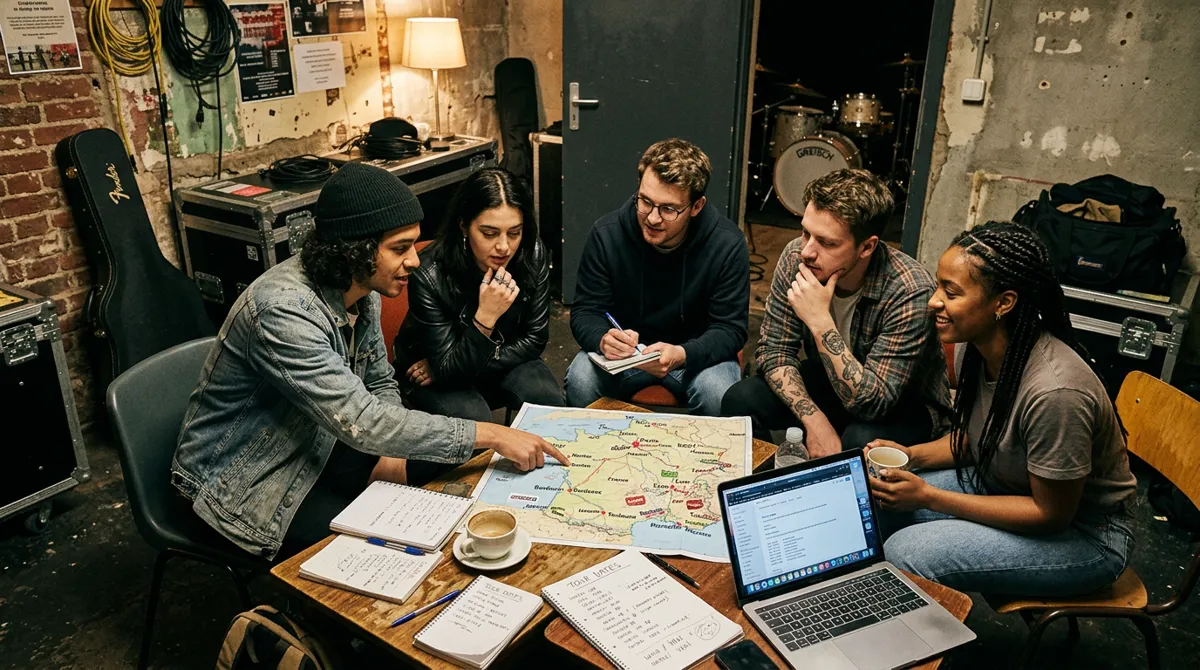
You do not need a booking agent for your first shows. Almost every band touring today started the same way: reaching out themselves. What sets them apart is not a magic address book, it is a method. Here it is, step by step.
Step 1: prepare your material before contacting anyone
A promoter who gets interested will look for three things in under two minutes. Have them ready before the first email goes out:
- Something to listen to instantly: a track or clip as a direct link (no attachments).
- Something live: a concert video, even simply filmed. It proves you can hold a stage.
- A one-page EPK: short bio, style, honest numbers (streams, shows played), photo, contacts.
Step 2: target venues your size
The classic mistake: pitching 500-cap rooms when you fill 50 chairs. Promoters think in terms of attendance. For a first run, aim at music pubs, small clubs and grassroots venues (30 to 150 capacity) in cities where you can draw a crowd or lean on the local scene.
Build a list of 30 to 50 venues that fit your style. Geography matters: chaining Glasgow-Brighton-Newcastle on the same weekend makes no sense. Think by region and by period.
Step 3: find the right contact (where it all plays out)
This is where most people give up. The website's info@ address is rarely read by the person who books. What you need: the real booking email, the promoter's name when it exists, or their socials as a fallback.
That is exactly what Stage-List gives you: direct contacts for 4,161 live music venues across the UK, with booking emails, phone numbers and socials, sorted by city and venue type.
Get access to the database →Step 4: write a short email that talks about the venue
A precise subject, a first sentence about the venue (not about you), your project in two proven lines, your links, a clear period. We detailed the full recipe, with a ready-to-copy template, in our guide to the booking email that gets you gigs.
Step 5: follow up once, at the right time
No answer does not mean no. A promoter handles dozens of requests between two show nights. Wait 7 to 10 days, then send ONE short follow-up: two sentences, polite, with your availability. After that, move to the next venue — that is what your step 2 list is for.
Step 6: confirm properly
When a venue says yes, lock it in writing: date, times (soundcheck, set), terms (fee, door split, expenses), gear on site, tech rider sent. A recap email is enough at this level, but it has to exist: it is what prevents bad surprises on show day.
Step 7: play, thank, rebook
After the gig, thank the promoter within 48 hours, share photos or videos of the night, and ask the question that builds your next season: "shall we do it again?" A venue where you played well is your best way into the neighbouring towns — promoters talk to each other.
The rhythm makes the difference
Booking is an endurance sport: 10 targeted emails a week beat 100 generic ones in a day. With the method above and a clean contact database, a 5 to 10 date run comes together in a few weeks of steady outreach.
Where to start: where to play in London, Manchester, Glasgow — or browse all cities.