The booking email that gets you gigs: template and examples
23 July 2026 · 4 min read
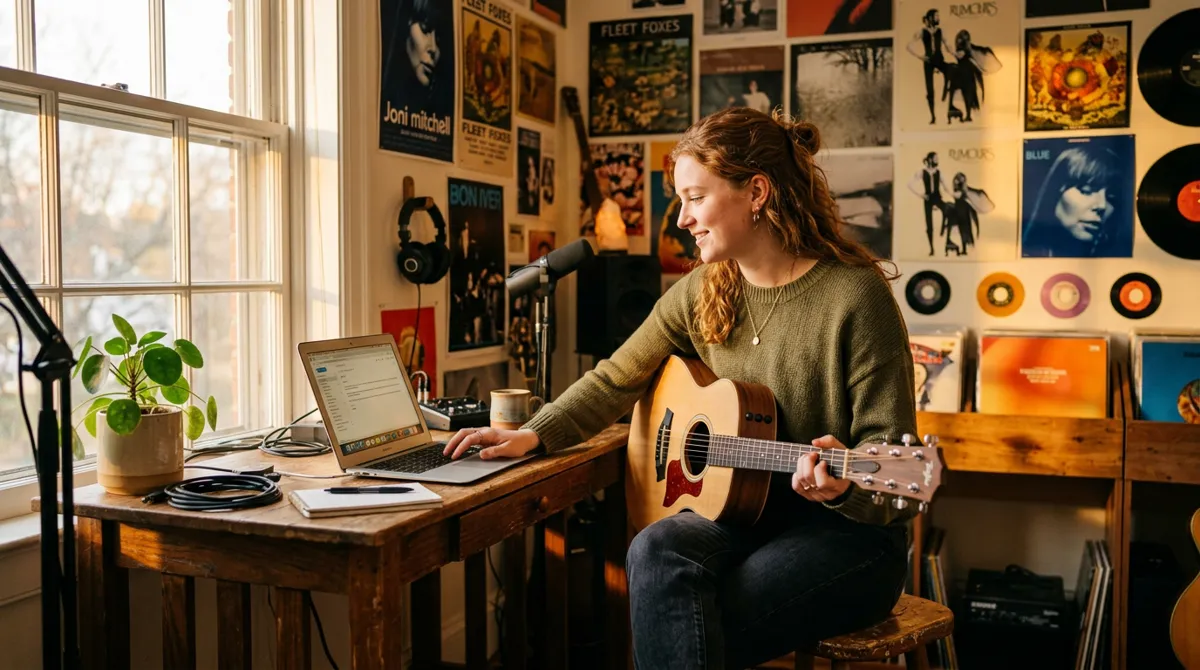
You have a solid project, good songs and the drive to get on stage. But your emails to venues go unanswered. That is the number one frustration for artists who book themselves: it is not talent that is missing, it is the way promoters get contacted.
The good news: an effective booking email follows a simple recipe. Here is how to write it, with a template ready to copy.
Why 90% of booking emails get ignored
A promoter receives dozens of pitches every week. They skim on their phone, between two meetings. Most emails get discarded in three seconds, always for the same reasons:
- They are generic ("Hi, we are looking for gigs"), sent in copy to 50 venues.
- They talk about the band, never about the venue.
- The important info (the project, the links) is buried in a wall of text.
- There is no clear proposal: what period, what format, why this venue.
Your goal is not to write a beautiful text. It is to let the promoter say yes in under a minute.
The 5 ingredients of an email that gets a reply
1. A precise subject line. It decides whether your email gets opened. Bad: "Gig request". Good: "[Band name] // indie rock // available autumn 2026 for a date in [City]".
2. A first sentence about THE venue. Show you did your homework. "I have been following your programming for months, and your room fits our live set exactly."
3. The project in two lines, with proof. Not your biography. A style, a hook, one concrete number (streams, shows played, a notable support slot).
4. Instant links. A track or a clip, an EPK, a live video. The promoter wants to listen, not read.
5. A proposal and an open door. A period, a format, and one simple question that calls for an answer.
The template to copy
Subject: [Band name] // [style] // available [period] for a date in [City]
Hi [First name],
I have been following your programming for a few months, and your venue really matches what we are looking for on our next live run (current music, intimate format, curious crowd).
I am [First name], [singer/guitarist] of [Band name], [style] based in [City]. We just released [single/EP], already [number] streams, and we played [date/venue/notable festival].
We are planning a run of dates for [period] and [City] is one of the cities we are targeting. We would love to play at your venue.
To get an idea in 2 minutes:
• Clip / track: [link]
• EPK + live: [link]Are you opening your programming for [period]? I can send the tech rider and our exact availability.
Have a great day,
[Full name]
[phone] • [Instagram] • [website]
The fatal mistake: the wrong recipient
The best email in the world is useless if it lands on info@ or a generic address nobody reads. That is where it all plays out: writing directly to the promoter, by name, at their real booking address.
That is exactly the problem Stage-List solves: direct contacts for 4,161 live music venues across the UK (booking emails, phone numbers, socials), so your email lands on the right desk, not in a dead inbox.
Get access to the database →The mistakes that kill your reply
- Sending the same email in copy to 30 venues (it shows, and it ends up in spam).
- Attaching a 10 MB PDF instead of links.
- Writing a novel. If it is longer than a phone screen, it is too long.
- Following up after 2 days. Leave 7 to 10 days, then one single short, polite follow-up.
In short
A good booking email is: a clear subject, one sentence about the venue, a proven project in two lines, links, a proposal. And above all, the right contact on the other end. The rest is up to your music.
Also worth a look: where to play in London, Manchester, Glasgow — or browse all cities.